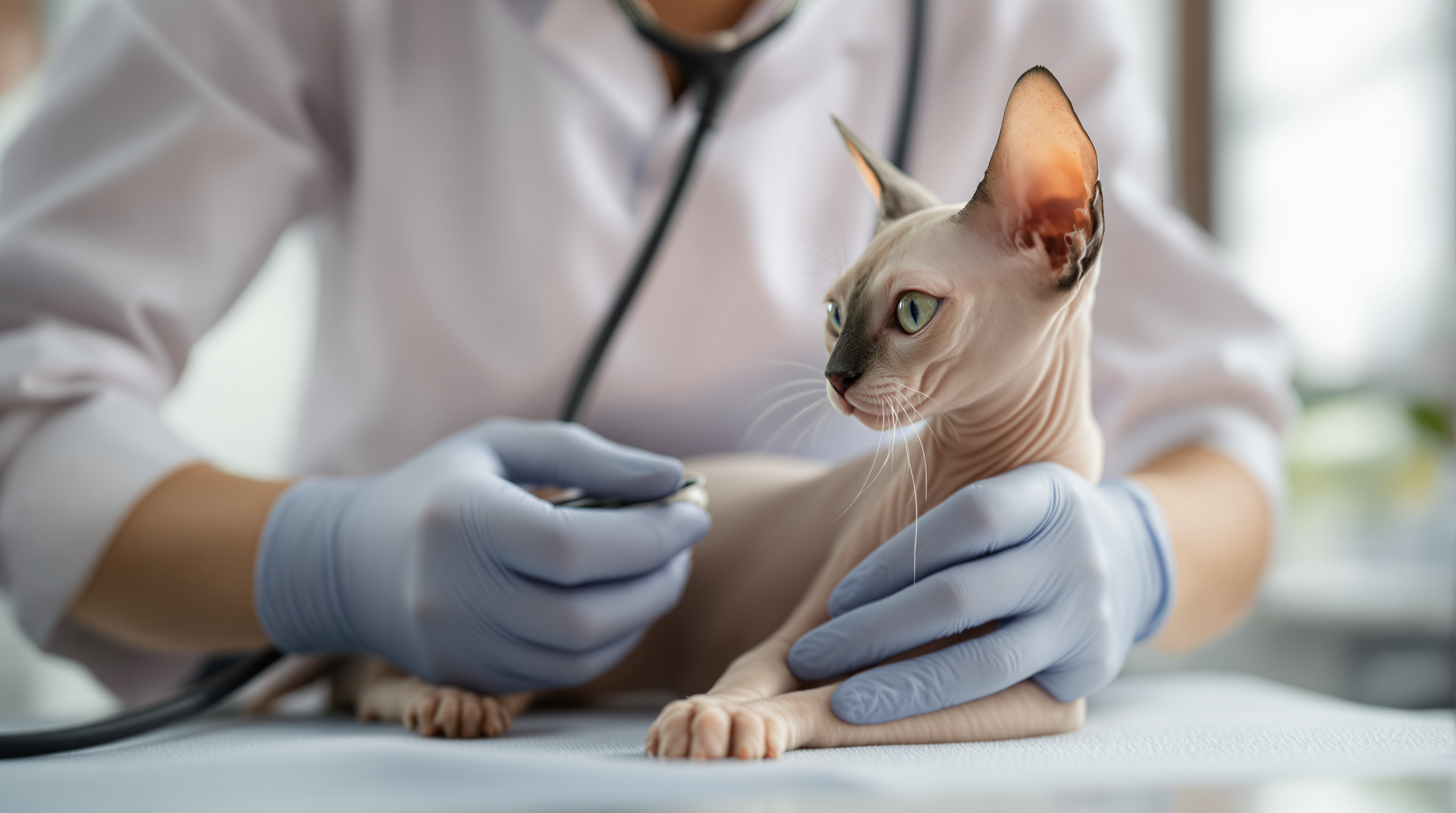
Understanding common health concerns and how to keep your hairless companion healthy and thriving.
While hairless cats are generally healthy, they are predisposed to certain conditions due to their unique physiology. Understanding these health concerns helps you provide the best preventive care and catch potential issues early. Regular veterinary check-ups are essential for maintaining your hairless cat's wellbeing.
HCM is the most serious health concern for hairless cat breeds, particularly Sphynx cats. This genetic heart condition causes the heart muscle to thicken, potentially leading to heart failure. In a 2024 New Zealand study of 55 apparently healthy Sphynx cats, 40% had HCM at a median age of 5.8 years.
A 2024 study in Animals screened 55 apparently healthy Sphynx cats in New Zealand. At a median age of 5.8 years, the authors reported an HCM prevalence of 40% in their study population. This is additional evidence from a particular group of cats, rather than a prediction for your own companion.
The ALMS1 gene variant was found in 70.9% of the cats but was not associated with an HCM diagnosis in this population. Ask your veterinarian how any genetic result relates to your cat's heart examinations. Cornell Feline Health Center also explains that many cats with HCM do not appear ill. The hairless cat heart health guide explains the studies, heart scans, and signs worth discussing with your veterinarian.
Without protective fur, hairless cats are susceptible to various skin issues. Their exposed skin requires careful attention and proper care routines.
Urticaria Pigmentosa: This condition causes itchy, raised lesions on the skin. While not life-threatening, it can cause discomfort. Treatment typically involves antihistamines and avoiding triggers.
Sunburn: Hairless cats can sunburn quickly, especially on ears, nose, and back. Always limit sun exposure and use pet-safe sunscreen when necessary.
Acne: Oil buildup can cause blackheads and pimples, particularly on the chin and tail. Regular bathing and gentle cleaning helps prevent breakouts.
Yeast Infections: The warm skin folds can harbor yeast. Keep skin dry and clean, particularly in areas where skin touches.
Hairless cats often experience dental issues at higher rates than other breeds. Periodontal disease, gingivitis, and tooth resorption are common concerns.
According to the American Veterinary Dental College, professional dental cleanings should begin around age 2-3 for hairless breeds.
Some hairless cats may be prone to respiratory infections and sensitivities. Their lack of nasal hair means less filtration of airborne particles.
Many hairless cats have sensitive digestive systems. Their higher metabolism and increased food intake can sometimes lead to gastrointestinal issues.
Regular veterinary visits are crucial for hairless cats. Here's a recommended care schedule:
Hairless cat health management requires a proactive rather than reactive approach. The costs associated with annual echocardiograms, regular dental cleanings, and specialized veterinary care are significant but worthwhile investments in your cat's longevity.
Understanding these costs before adoption helps owners prepare financially for their hairless cat's specialized health needs. The ASPCA recommends budgeting for both routine preventive care and unexpected health emergencies when considering hairless breed adoption.
While hairless cats may have more health considerations than average cats, proactive care and regular veterinary attention can help them live long, healthy lives of 12-15 years or more. The key is early detection through regular screening and maintaining proper care routines at home.